Sport, Diplomacy, and Soft Power: Lessons from the 2026 World Cup
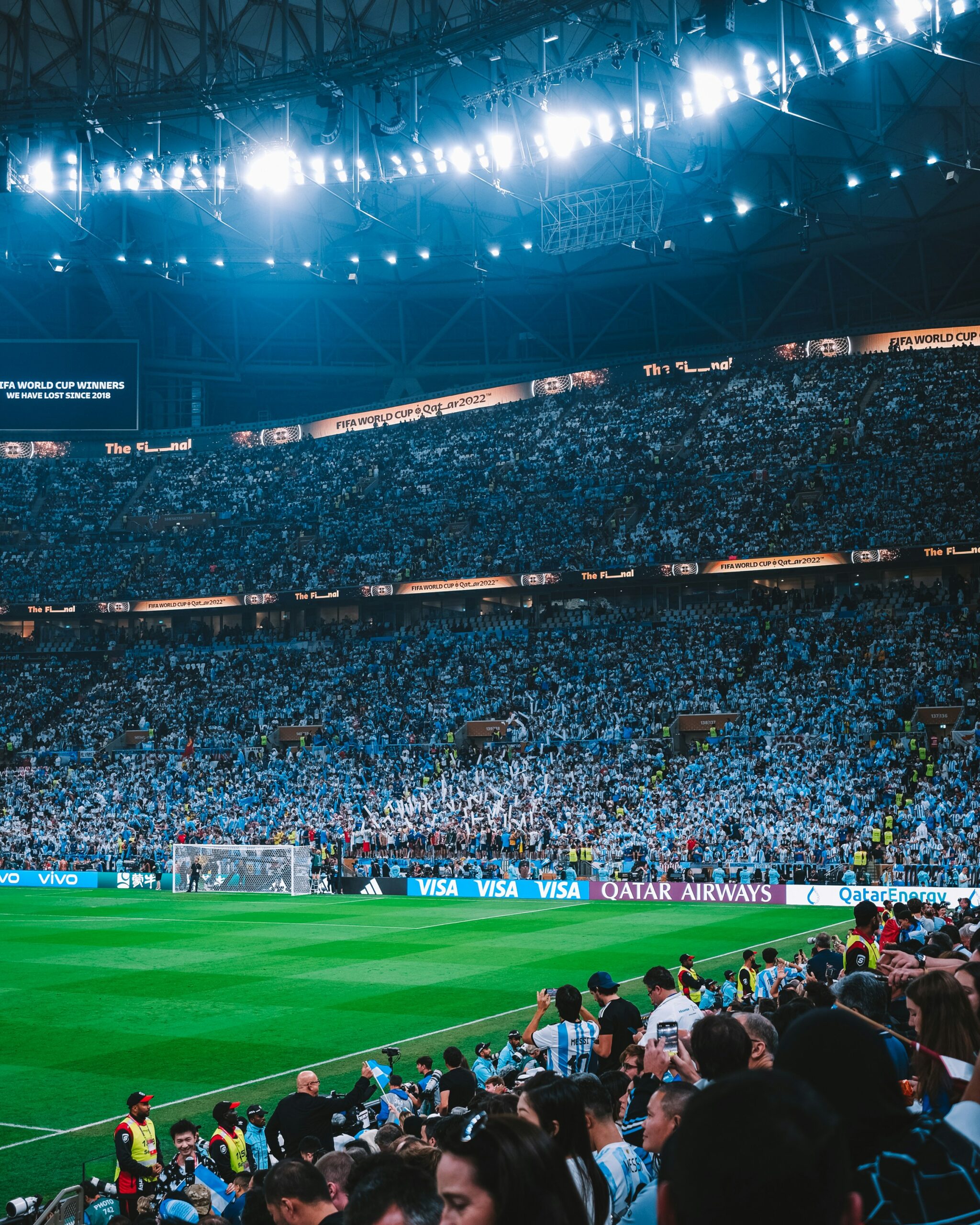
Sport, Diplomacy, and Soft Power: Lessons from the 2026 World Cup
Iran is at war with the United States. Iran is also competing in a World Cup hosted by the United States. What the 2026 tournament teaches us about sport, diplomacy, and soft power.
Imagine a scenario in which you have to play a match in a country that is currently bombing and attacking your country. This is the current reality of the Iranian football team in the 2026 FIFA World Cup in the United States.
- What sports diplomacy is and how it relates to soft power
- How Ping-Pong Diplomacy in 1971 opened the door to Nixon’s China visit
- The 2026 World Cup as a live IR case study — Iran, visa bans, and geopolitical tension
- Sportswashing, illiberal democracy, and FIFA’s structural weakness on sovereign borders
What is Sports Diplomacy?
Sports have a way of connecting us together as humans collectively. For many, sports is a leisure thing and can even be connected to a place, such as a state for pride. The most relevant depiction of this is the FIFA World Cup happening right now. The World Cup has nations from around the world compete against each other in an international venue. As a result of this, fans, players, and staff experience a foreign nation playing abroad, opening their perspective of other states. This can be described as soft power — a concept deriving from Joseph Nye — which refers to the ability to influence through attraction and persuasion rather than conflict or aggressive rhetoric. Not only the World Cup, but also the Olympics, FIBA, and the World Baseball Classic all spread soft power, to name a few more examples.
Sports diplomacy uses sports to try to influence or enhance relations between states in goodwill. In the case of the 2026 World Cup, the soft power largely comes from the host nations, with the United States in particular. The World Cup comes at a time when the US image has been tainted by the war in Iran. The tournament helps shift focus off the conflict and onto sport and soft power.
Historical Example
One of the biggest historical examples of sports diplomacy is Ping-Pong Diplomacy (1971). While the US amateur table tennis team was competing at the World Table Tennis Championships in Japan, an American player missed his team’s bus following practice and boarded the Chinese team’s bus, ultimately befriending Chinese player and champion Zhuang Zedong. As a result of this friendship, China invited the US table tennis team to China for a visit — which was extraordinarily significant, as there had been little to no communication between the two countries following the 1949 Communist Revolution (National Museum of American Diplomacy, 2021). The trip eventually led to President Nixon’s historic visit to China in 1972, establishing diplomatic relations between the two superpowers. A single missed bus, a single conversation between two athletes, opened a diplomatic door that years of formal statecraft could not.
A single missed bus and a conversation between two athletes opened a diplomatic door that years of formal statecraft could not.
The 2026 World Cup as a Live IR Case Study
For the first time ever, the 2026 World Cup is co-hosted by three states: Canada, the United States, and Mexico. But that is not the biggest story. The bigger story is that Iran qualified for the World Cup while simultaneously being at war with the United States — at a fragile moment where conflict could break out again at any time in the Middle East. Due to US visa restrictions and the denial of visas for several Iranian coaching staff, Iran’s training base was established in Tijuana, Mexico, just across the border, with players flying in only for match day and leaving immediately after the final whistle (Alvarez & Feldscher, 2026).
The political dimension of Iran-US relations during the World Cup has been on full display, with the sporting event serving as a backdrop to ongoing diplomatic negotiations. There are people who will say football is not political. For those people — how do you think these grandiose, billion-dollar stadiums were paid for? World Cup stadiums and most modern sports stadiums are built with largely public money and government guarantees. The host nation signs legal agreements with FIFA obligating it to facilitate visas and security. There is no version of a FIFA World Cup that exists outside the jurisdiction of states.
Furthermore, Omar Artan — a prestigious FIFA referee — was banned from entering the United States because he holds a Somali passport, a country on Trump’s travel ban list (Montoya-Galvez, 2026). Artan had already received his visa but was turned away at Miami airport. Canada, upon hearing this, invited Artan to referee matches in Canada instead. That gesture — a co-host stepping in to welcome the official its partner turned away — quietly illustrates the geopolitical fault lines running through this three-nation tournament.
The IR Analysis
While writing this article, the World Cup is still going on. Perceptions of the United States so far have been mixed — both positive and negative. The tournament gives the US a chance to showcase its culture to foreigners through soft power. But it can also be debated whether this World Cup is a form of sportswashing: using a sporting event to alter a state’s image on the international stage. The most recent examples of sportswashing among World Cup hosts have been Russia 2018 and Qatar 2022. Russia 2018 came after Russia’s illegal annexation of Crimea and eastern Ukraine — an attempt to project friendliness and restore a damaged international image. For Qatar 2022, there were serious scandals regarding the construction of stadiums. Qatar brought in migrant workers from abroad who faced rights violations, illness, wage theft, and in many cases death (Human Rights Watch, 2022). Sportswashing is usually reserved for authoritarian states — but perhaps it can now be applied to an illiberal democracy.
An illiberal democracy — a term originating from Fareed Zakaria in his 1997 Foreign Affairs essay “The Rise of Illiberal Democracy” — refers to a state that holds elections but routinely ignores constitutional limits on power and deprives citizens of basic rights and freedoms (Zakaria, 1997).
While both the Olympics and FIFA promote soft power through sport, there are significant structural differences between the two organisations. The Olympics has a mechanism that allows athletes from countries with no diplomatic relations with the host to attend regardless. FIFA has no equivalent. FIFA’s structural weakness is that the host country’s sovereign right to control its borders can prevent players, staff, and fans from qualified nations from entering and competing. This is exactly why the Iran situation at this World Cup is unfolding as it is — and it sets a troubling precedent. Imagine if Israel qualifies for the 2034 World Cup in Saudi Arabia. How would that look?
Conclusion
This article described sports diplomacy and how it relates to soft power. Soft power comes in many different shapes, sizes, and forms — this piece only briefly analysed it through the lens of a single mega sporting event. So what does it tell us that the two states signed a ceasefire while simultaneously competing at the same World Cup?
The World Cup is at least partially responsible for why US-Iranian peace talks have remained in place. The logic is straightforward: the World Cup creates a soft power incentive for a host state to maintain the ceasefire, because restarting the conflict during a global sporting event would damage its international image at the very moment it is trying to project openness and hospitality. It could be coincidence that peace talks happened at the same time as the tournament — but after understanding soft power, it is clearly in the US interest not to resume attacking a nation whose athletes are competing on its own soil. Restarting the conflict during the World Cup would be a massive reputational loss.
The 2026 World Cup has set new precedents. If this tournament has demonstrated anything, it is that FIFA’s structural weakness on host nation sovereignty is no longer a theoretical problem — it is a live one, and it needs a solution before 2034.
References
- Alvarez, P., & Feldscher, K. (2026, June 16). US says Iran was always supposed to fly back to Mexico immediately after World Cup match, despite coach’s complaints. CNN. https://edition.cnn.com/2026/06/16/sport/iran-leaves-usa-world-cup
- Human Rights Watch. (2022, November 14). Qatar: Rights abuses stain FIFA World Cup. Human Rights Watch. https://www.hrw.org/news/2022/11/14/qatar-rights-abuses-stain-fifa-world-cup
- Montoya-Galvez, C. (2026, June 15). Somali World Cup referee denied entry into U.S. was talking to “some very bad people,” White House official says. CBS News. https://www.cbsnews.com/news/somali-world-cup-referee-omar-artan-talking-to-very-bad-people-andrew-giuliani/
- National Museum of American Diplomacy. (2021, August 5). Ping-Pong diplomacy: Artifacts from the historic 1971 U.S. table tennis trip to China. National Museum of American Diplomacy. https://diplomacy.state.gov/ping-pong-diplomacy-historic-1971-u-s-table-tennis-trip-to-china/
- Zakaria, F. (1997, November/December). The rise of illiberal democracy. Foreign Affairs, 76(6), 22–43. https://www.foreignaffairs.com/world/rise-illiberal-democracy
Stay Ahead of the Story
Conflict Brief explains international relations and geopolitics clearly, without the noise. Free articles, analysis, and IR tools — with more added regularly.
Subscribe Free →
One Comment