Russia’s Drone Incursions?: Hybrid Warfare at NATO’s Border
Russia's Drone Incursions?:
Hybrid Warfare at NATO's Border
Ukraine's drones are aimed at Russian oil infrastructure. Russia is redirecting them into allied airspace — and that is entirely the point.
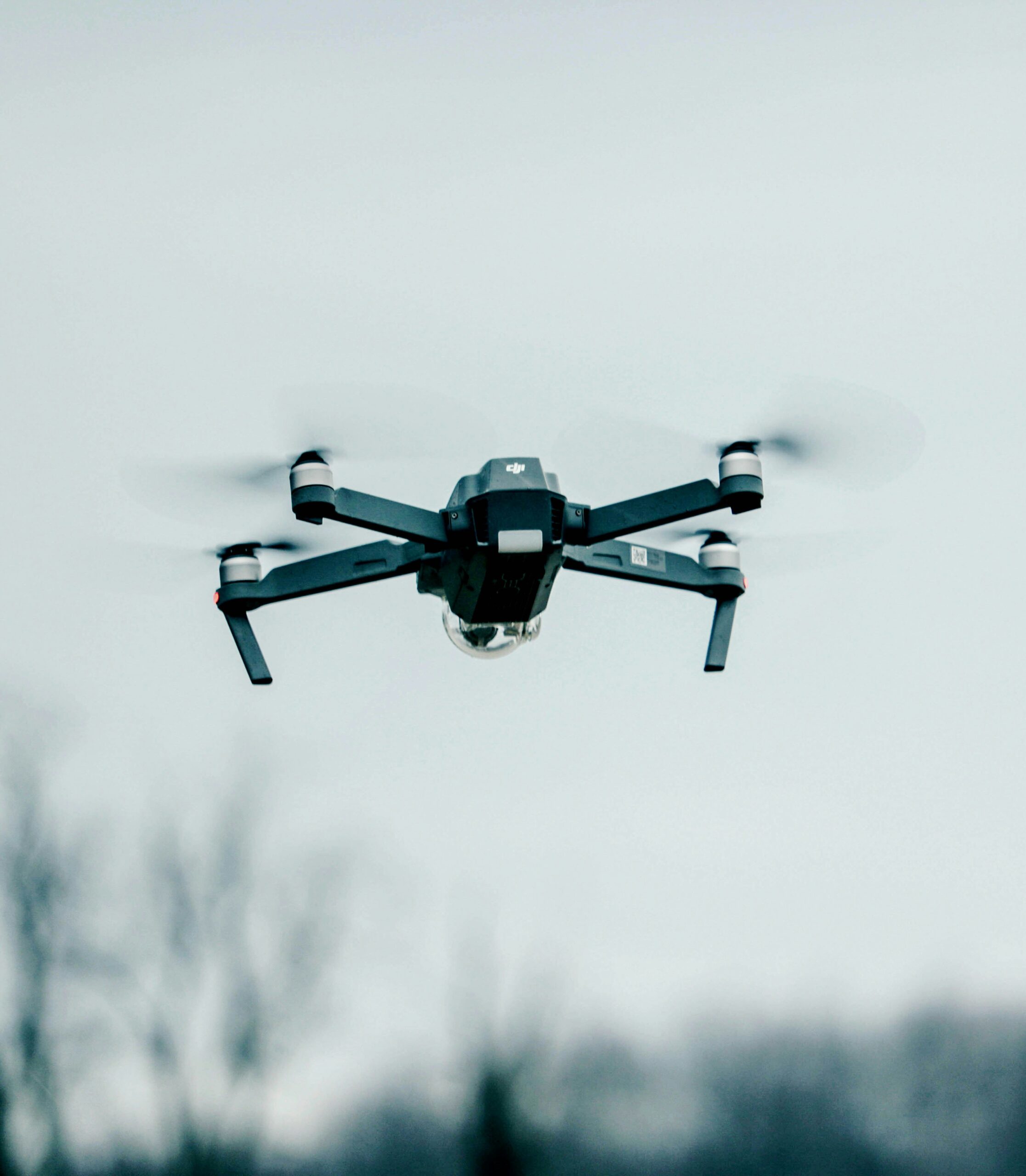 Photo: Kaleb Kendall / Unsplash
The most recent drone incursion into Latvia on June 8th, 2026 marks the seemingly increasing number of Ukrainian drones rerouted by Russian electromagnetic warfare into NATO airspace. Most people tend to think that the Russia-Ukraine war is happening only in Russia and Ukraine. The truth is, its effects surpass borders that most people do not know about. The Baltic States of Lithuania, Latvia, and Estonia have begun to see a rise in these incidents, with Latvian authorities confirming the latest involved Russian GPS jamming that redirected a Ukrainian drone off its original course into eastern Latvian territory.1 Those drones were originally intended to strike Russian energy infrastructure near the Baltic coast and western Russia — regions that are, geographically, not far from the Baltic States and Scandinavia at all.
- What Russia’s drone violations of NATO airspace are designed to achieve — and why they are not accidents
- Grey-zone coercion, escalation management, and the limits of collective defence
- How the incidents test NATO’s Article 5 commitment and Alliance cohesion
- The deterrence theory implications for the eastern flank states
Hybrid warfare refers to the use of ambiguous, deniable tactics — cyberattacks, disinformation, electromagnetic interference — that fall below the threshold of conventional military action. The goal is to create pressure and instill uncertainty without triggering a formal military response from the target.
Why Is Russia Rerouting Drones into NATO Airspace?
The jamming and rerouting of Ukrainian drones is a calculated form of hybrid warfare. By deflecting drones that were never intended for NATO territory into allied airspace, Russia achieves several objectives simultaneously — while maintaining plausible deniability for each of them.
The first objective is to stir fear and skepticism about NATO's ability to defend its own borders. When an unidentified drone lands in Latvia or triggers air defense responses over Poland, it raises public and political questions about the alliance's preparedness — questions Russia is happy to amplify. The second objective is narrative: Russia has itself accused the Baltic States of permitting Ukrainian drones to transit their airspace to strike targets inside Russia. This accusation is false, but it serves a strategic purpose, constructing a justification for hypothetical escalatory action against Baltic states under the pretext of “hostile” behavior.
The geographic spread of these incidents underscores how deliberate the pattern appears. This is not confined to one border. The incidents below are not exhaustive — unknown drone sightings have been reported across Europe — but they illustrate a clear and escalating pattern over a recent timespan.
Eastern Latvia
A drone is shot down by NATO jets after Latvian authorities confirm it was rerouted into their airspace by Russian electromagnetic warfare.
Port of Constanța, Romania
A drone explosion at Romania's Black Sea port, confirmed by European Council President António Costa, who expressed full EU solidarity with Bucharest.2
Estonia
An intruding drone is intercepted and shot down by a Romanian fighter jet operating within NATO's Baltic Air Policing mission.3
Poland
Polish authorities report that 19 Russian drones entered Polish airspace, with Poland shooting down those it could track and confirm.4
Unidentified drone sightings near airports have been reported even in western Europe. The geographic reach of these incidents now spans virtually all of eastern NATO territory.
Desperation or Strategy — or Both?
One of the main reasons Russia pursues these hybrid tactics is their deniability: when a drone lands in Latvia, Moscow can shrug. But there is a deeper dynamic at play. Russia's conventional military has been significantly degraded by over two years of grinding warfare in Ukraine. A state that is losing ground — or barely holding it — does not project the kind of hard power that deters NATO from supporting Kyiv. Hybrid tactics fill that gap, allowing Russia to apply pressure without committing forces it may not have to spare.
If Russia is losing or barely gaining ground in Ukraine, the question becomes whether it could even manage to invade another state — a NATO member or not.
The current fracturing of Trans-Atlantic ties plays directly into Russia's calculus. With the United States occupied on multiple fronts — Iran, tensions over Cuba, and the ongoing question of Greenland's strategic status — NATO's collective attention is divided. Russia reads that division as an opportunity to probe the alliance's responses without triggering a unified reaction. Each drone incursion is, in effect, an intelligence-gathering exercise: how fast does NATO scramble jets? What rules of engagement apply? How do member states communicate with each other when a drone crosses multiple borders in minutes?
Meanwhile, Ukraine's continued strikes on Russian energy infrastructure are economically significant, chipping away at the revenue streams that fund Russia's war machine. As that pressure intensifies, Putin faces a narrowing set of options. A full mass mobilization — the kind that would genuinely alter battlefield dynamics — carries serious domestic political risk, given how unpopular the war already is among significant segments of Russian society. Hybrid harassment of NATO, by contrast, costs relatively little and keeps the alliance psychologically off-balance.
What Has NATO Done?
NATO and its member states are adapting, though the pace of adaptation varies. Estonia has been among the most forward-leaning, publicly announcing plans for a “Drone Wall” — a layered detection and interdiction system designed to identify and neutralize unknown drones before they penetrate deep into national territory. The concept is still being developed and tested, but its very announcement signals a broader shift in how at least some alliance members are thinking about drone threats as a permanent feature of the security environment, not an anomaly.
The current response posture, however, carries a significant cost problem. Intercepting small, cheap drones with NATO fighter jets and air-to-air missiles — some of which cost hundreds of thousands to several million dollars per round — is economically unsustainable at scale. This asymmetry is itself part of Russia's calculation: forcing expensive responses to cheap provocations gradually degrades NATO's air defense inventory and strains defense budgets. The alliance will need to develop lower-cost countermeasures — directed energy weapons, drone-on-drone intercept systems, and improved electronic countermeasures — if it is to address this threat without bankrupting itself doing so.
The Bigger Picture
Russia's drone incursions are one thread in a much larger tapestry. They are not, by themselves, acts of war — and that ambiguity is the point. They sit in the grey zone between provocation and attack, designed to generate anxiety without justifying Article 5 invocation. Understanding them as hybrid warfare, rather than isolated accidents or technical malfunctions, is the first step toward responding effectively.
What this moment underscores most clearly is that the security of NATO's eastern flank and the fate of Ukraine are not separate questions. Every kilometer of Ukrainian resistance is a kilometer that Russia is not using to mass forces near Narva or Suwałki. Continued support — military, economic, and diplomatic — for Ukraine is not charity. It is the West fighting its own security battle at one remove, at a fraction of what direct confrontation would cost.
NATO needs to continue modernising its militaries and maintain its commitment to Ukraine. The regrowth of Trans-Atlantic unity — frayed in recent years by political turbulence on both sides of the Atlantic — would significantly weaken Russia's strategic calculus. A coherent, resolute alliance is the one thing Russia's hybrid playbook cannot easily circumvent. The security of Europe rests, in no small part, on Ukraine continuing to hold.
- Latvian Public Broadcasting (LSM). (2026, June 8). Drone shot down by NATO jets in eastern Latvia. eng.lsm.lv
- Costa, A. (2026, June 5). Full solidarity and support to Romania following the drone explosion in the port of Constanța. European Council. consilium.europa.eu
- Mäekivi, M., Ots, M., & Ideon, A. (2026, May 19). Intruding drone shot down by Romanian fighter jet in Estonia. ERR News. news.err.ee
- Easton, A., & Lukiv, J. (2025, September 10). Poland says it shot down Russian drones after airspace violation. BBC News. bbc.com